

 +886-4-2320 3456
2026 WGM FAQ Revisions
2026/4/1
2026/4/1
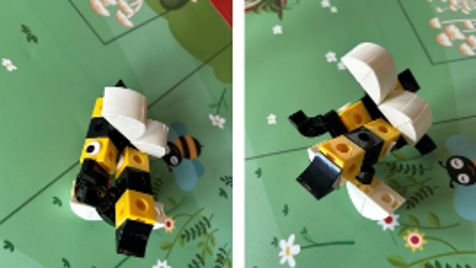
Original Answer: Interlocking can be used for transport.
Revised Answer: Interlocking is allowed, but the bees must not be flipped or turned upside down.
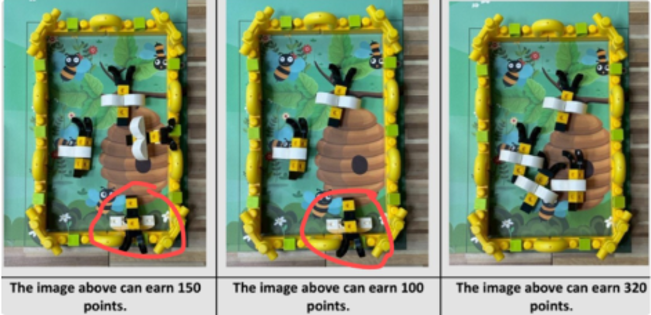
Original Answer: The green frame in the manual refers to the map’s green frame, not the A-90 degree green connector.
Revised Answer: Scoring is determined by whether the bees are inside the beehive. If any part of the beehive presses on any portion of the green boundary line on the map, the bees inside the hive will be counted for points.
Original Answer: Yes, it must be weighed together, and cannot be taken away after inspection. It is recommended to use two different phones.
Revised Answer: The vehicle will only be weighed after the competition ends, and only if rankings are tied. Control devices such as phones, tablets, and controllers are not included in the weight measurement. Except for controllers, whether phones or tablets are taken out of the venue is at the participant’s discretion. The organizer is not responsible for safekeeping.
Original Answer: It must be corrected immediately; otherwise, participation is not allowed.
Revised Answer: The competition will start according to the official schedule. Non-compliant robots may continue to be repaired, and can only compete once they meet the requirements.
Original Answer: Yes.
Revised Answer: Placement is unrestricted. Interlocking is allowed, but stacking or connecting bricks together is not permitted.
.png)
Original Answer: If total scores are tied, a PK round is conducted. Three consecutive throws are made and recorded. The first to win determines the ranking (if decided on the first throw, subsequent results do not affect ranking).
Revised Answer: If total scores are tied, a PK round is conducted. Three consecutive throws are made and recorded, and the first to win determines the ranking.
Original Answer: A 10-minute repair time is provided before the competition. Except for the throwing device, which can be reset before activation, the other 8 stages must be reset within 10 minutes.
Revised Answer: A 10-minute repair time is provided before the competition. Except for the throwing device, which can be reset before scoring, the other 8 stages must be reset within 10 minutes.
Original Answer: Devices may exceed the base grid; size is unrestricted.
Revised Answer: Each base platform must contain one stage. The overall structure must not exceed the total base dimensions (150 × 40 cm). In case of overlap between boards, a lenient interpretation will be applied, as long as participants can clearly explain which base area the stage belongs to.
Original Answer: Yes, before the robot touches them, teams may make minor adjustments within the designated grid.
Revised Answer: Yes, before the robot makes contact, teams may adjust positions within the grid. However, movement must remain strictly within the grid space, and the vertical projection must not exceed the grid boundary.